Period Poverty
Blog
More Than Just Pads: The Silent Struggle of Period Poverty in Nigeria
Sabrina Nwonye
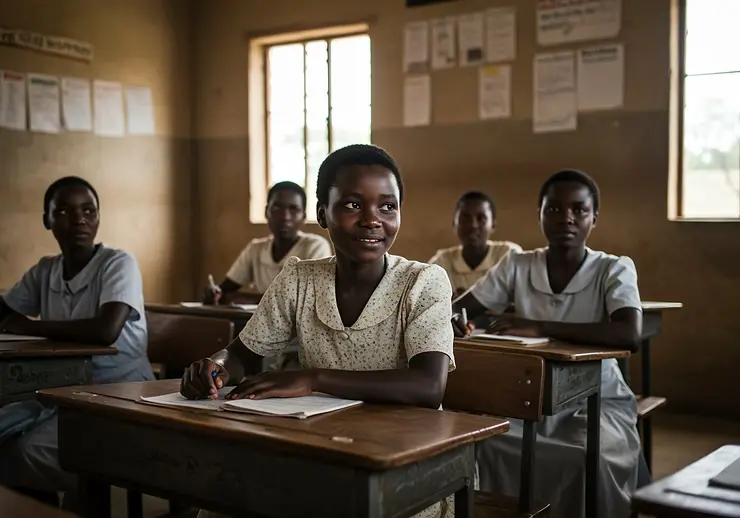
If you’re reading this, you’ve probably never had to calculate whether you can afford sanitary pads this month, or decide to miss a class, a meeting, or a day’s work because you don’t have access to basic menstrual products. For an estimated 37 million women and girls in Nigeria, however, this is a familiar reality.¹ Period poverty is not only about pads or tampons. It often means going without pain relief, proper underwear, or a safe, private place to change or clean up. For many girls and women, managing a period becomes a monthly exercise in improvisation, stress, and silence.
What exactly is period poverty?
Period poverty refers to the inability to afford or access the products, information, and facilities needed to manage menstruation safely and with dignity. It includes the lack of menstrual products, but also gaps in education, awareness, water, sanitation, and hygiene infrastructure. In many parts of Nigeria, especially in rural or low-income communities, girls are left with few options. Some rely on rags, scraps of cloth, old towels, or tissue paper because there is simply nothing else available. These are not choices made out of preference, but out of necessity.²
Why does period poverty matter?
The effects of period poverty stretch far beyond the menstrual cycle itself. Education is one of the most visible areas of impact. Across sub-Saharan Africa, many girls miss school because of menstruation, sometimes losing a significant portion of the academic year. In Nigeria, more than half of school-age girls are reported to stay home during their periods, often out of fear of leaks, odour, or ridicule.³ What begins as a few missed days can quickly turn into falling behind, disengagement, and, for many, dropping out altogether. Period poverty is widely recognised as one of the factors contributing to the millions of children, most of them girls, who are out of school in Nigeria.¹
Health is another concern. Using makeshift or unhygienic materials increases the risk of reproductive and urinary tract infections.⁴ The physical discomfort is often compounded by anxiety and emotional distress, particularly in environments where menstruation is treated as something shameful or embarrassing.
Beyond health and education, there is the quieter erosion of dignity. Girls may withdraw from social activities, avoid public spaces, or internalise the idea that their bodies are a problem to be hidden. In some communities, menstruation is wrongly associated with readiness for marriage, adding social pressure to an already difficult experience.⁵ Over time, these realities limit confidence, participation, and opportunity, reinforcing broader patterns of gender inequality.
Coping when the basics are missing
When menstrual products are unaffordable, some girls are pushed into desperate coping strategies. One of the most troubling is transactional sex, where girls exchange sexual favours simply to obtain pads. This exposes them to gender-based violence, exploitation, HIV, and other infections.³ At the same time, stigma keeps conversations locked away. In many households, menstruation is not openly discussed, even between mothers and daughters. Silence becomes another barrier, making it harder to seek help or find solutions.
What is being done?
The good news is that change is starting to happen. Across Nigeria, community groups, NGOs, and grassroots organisations are stepping up. They educate girls about menstrual health, distribute free or low-cost pads, and introduce reusable products. Some organisations advocate for removing taxes on menstrual products to make products more affordable. There’s also a growing push to update school facilities so that girls have safe, private places to manage their periods.
Last year marked a major milestone: Nigeria launched its first-ever national policy on menstrual health and hygiene, set to run from 2025 to 2030. This is a huge step, as it puts menstrual health on the national agenda and opens doors for more widespread support.
What still needs to change
Policy recognition alone is not enough. Menstrual health education needs to be normalised, so that girls and boys grow up understanding menstruation as a natural part of life. Schools must be equipped with clean water, functional toilets, and private spaces. Menstrual products should be affordable and accessible, regardless of income or location. Most importantly, the silence must be broken. Myths and taboos thrive when periods are treated as something unspeakable.
How can you help?
You don’t need to be a policymaker or run an organisation to make a difference. Sharing accurate information, challenging harmful myths, supporting local initiatives, and listening to the experiences of girls and women around you all matter. Small actions, repeated consistently, can shift attitudes and open space for change.
Conclusion
Ending period poverty in Nigeria will take time, commitment, and collective effort. But every conversation, every school improved, and every girl supported moves us closer to a future where menstruation no longer stands in the way of education, health, or dignity. Even small efforts can create powerful ripple effects.
Footnotes / Sources
Gavi, the Vaccine Alliance (2024).
Uzoechi et al. (2023); Uwadia et al. (2022). Menstrual hygiene practices and inequalities among Nigerian schoolgirls.
Shomuyiwa et al. (2024). Transforming adolescent menstrual health through policy.
Odey et al. (2021). Period during a pandemic: the neglected reality of Nigerian girls and women.
Sumpter & Torondel (2013). Health and social effects of menstrual hygiene management.
WaterAid Nigeria; UNFPA Nigeria; Nigeria Health Watch (various years).
